

blog

The French duty of vigilance law, the privileged instrument for climate change litigation
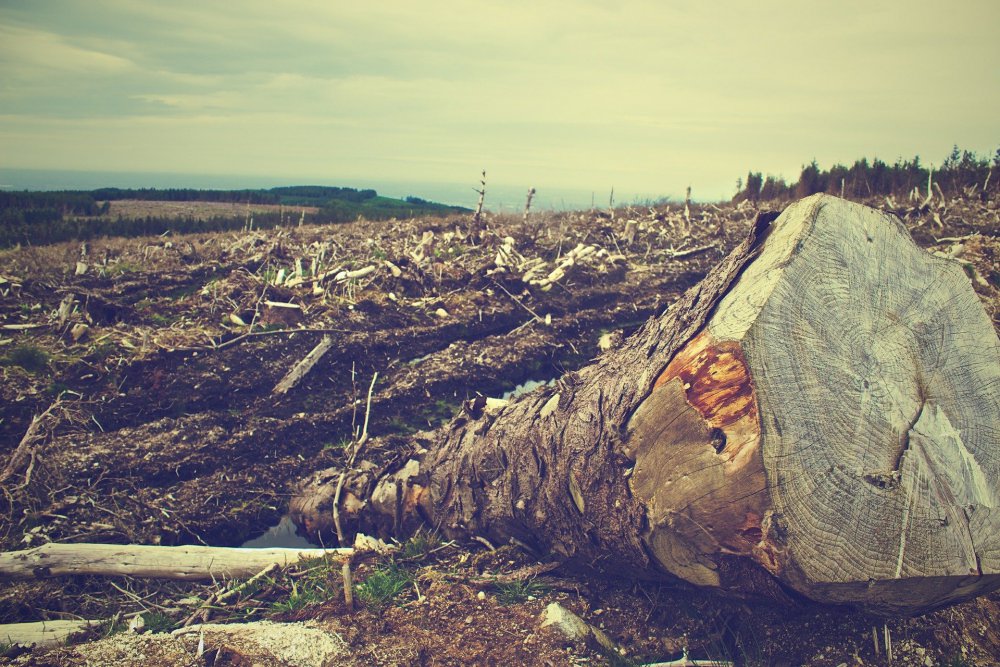
On September 21, 2020, several non-governmental organizations (NGOs) served a formal notice to Casino Group to comply with its vigilance obligations with regard to the risks associated with deforestation in South America, due to the Group's activity, notably in Brazil.
This formal notice is based on the findings of the Envol Vert’s[1] report of June 2020 according to which Casino Group's suppliers have regularly procured from farms that have contributed to deforestation by cattle ranching[2].
This is the seventh formal notice issued on the basis of the French duty of vigilance law[3]. Other legal actions certainly lie ahead. Last March, Notre Affaire à Tous claimed for example that 25 French multinational corporations failed to meet their obligations under the French duty of vigilance law as they did not take all necessary measures to reduce their greenhouse gas (GHG) emissions in line with the Paris Agreement's goal to limit global warming to 1.5°C[4].
In the absence of global governance on climate change, the French duty of vigilance law has become the NGOs’ preferred instrument to oblige companies to radically reorient their production model in line with the Paris Agreement’s objectives. Indeed, this law allows to transform the soft law into hard law[5]. By linking environmental damage and human rights violations to the lack of vigilance exercised by French companies over their supply chain, NGOs can held parent companies liable and give their actions the maximum publicity.
As the report of December 2019[6] of the research mission “Law and Justice” and the French National Research Council (CNRS) rightly notes: “These lawsuits are based on the Paris Agreement – and in particular on its the temperature objective to limit global warming to 1.5°C – in order to (...) oblige” large polluting companies “to pay compensation or to stop particularly polluting activities.”[7] This reliance on duty of vigilance also allows “to avoid most of the technical and political obstacles that stem from the historical dimension of the corporate legal liability for climate change.”[8] This report also emphasizes the fact that climate litigation has become a new form of activism: “Among the ‘weapons’, the law appears as the privileged instrument of this societal activism, which is translated by a ‘judicial activism’ before the courts”[9] or “Litigation is understood as a means of action among others (demonstrations, lobbying, petitions etc.), that members of a protest movement use to achieve their objectives.”[10]
This increasing judicialization is a formidable tool in the fight against climate change, and was conceived as such by the NGOs during the adoption process of the French duty of vigilance law. It is also a major source of legal insecurity for companies as this law is insufficiently clear and precise. This is especially true as it extends significantly the corporate civil liability because companies can be held responsible for thousands of entities of their supply chain. In its decision of 2017[11], the French Constitutional Court underlined that civil liability is based on the general tort law. The French duty of vigilance law did not therefore establish a regime of liability for the actions of others. The French Constitutional Court also indicated that the obligation to effectively implement a vigilance plan is an “obligation des moyens” (obligation to take all steps in company’s power to reach a certain result) rather than an “obligation des résultats”) (obligation to guarantee the attainment of that result).
One can only advise French companies subject to the duty of vigilance to respect two main obligations of vigilance:
(i) the publication of the vigilance plan in the management report. This plan has to be both synthetic and comprehensive; and
(ii) ensuring the regular control of their suppliers and subcontractors. The companies should not hesitate to terminate these commercial relations if insufficient guarantees are provided by their suppliers.
Companies should also pay close attention to the European Commission's initiative to adopt European legislation on a duty of diligence which is directly inspired by the French duty of vigilance law. The Commission's initiative, which has been endorsed by the European Parliament, is based on a report on a “on due diligence requirements through the supply chain” commissioned from British agencies[12]. The Commission seems to conclude that there is a need for a legislation – and not just of guidelines – that would require all companies (even TWAs and SMEs) to monitor their supply chains against the European Union's social, human and environmental standards. Additional obligations notably to respect the Paris Agreement’s objective will be imposed on large companies. According to our information, the Commission is considering to leave to the Member States the enforcement of this legislation, including to determine the civil liability regime. This is probably not a good idea, as it would open the door to legal uncertainties and inequalities in the internal market. Fortunately, the European Parliament, in its recent legal brief[13] of June 2020, recommends the extension of the future duty of diligence to all foreign companies providing goods and services on the territory of the European Union. It remains to be seen under what conditions this obligation can be imposed on foreign multinational companies.
In this context, the dynamics of climate litigation is not about to slow down. On the contrary, it will accelerate. The example of the United States, where, for the past ten years, climate change litigation has been exploding, corroborates this forecast. In fact, the database of the Sabin Center for Climate Change Law now identifies 1,106 climate lawsuits worldwide, 686 of which were brought in the United States[14]. To date, the American courts have raised various objections to the disputes brought against the State or private companies (e.g., non-justiciability of the climate issue, NGOs’ right to bring a legal action, difficulty to establish the causal link and appreciate the damage as environmental damage is "global", etc.). But these traditional principles of civil liability may yield to the adherence of a growing number of judges to the climate cause as they will be inclined to view these legal restrictions as too rigid.
Therefore, we can only make two recommendations to companies in case they are faced with climate-related litigation:
• consider creating a coordinating structure with outside legal counsel to determine a strategy for the ecological transition, which is also a social and human transition;
• establish robust due diligence programs.
[1] Created in 2011, the goal of this NGO is to protect forests and biodiversity in the planet’s most disadvantaged countries as well as in France.
[2] Envol Vert, Groupe Casino éco responsable de la déforestation, June 2020.
[3] Law No 2017-399 of March 27, 2017 on the corporate duty of vigilance for parent and instructing companies.
[4] Vigilance climatique : Notre Affaire à Tous interpelle 25 multinationales françaises suite à son rapport comparatif identifiant leurs nombreuses défaillances, March 2020.
[5] N. Lenoir, La loi sur le devoir de vigilance ou les incertitudes de la transformation du droit souple en règles impératives, La Semaine juridique – Entreprise et Affaires, No 26, June 25, 2020.
[6] M. Torre-Schaub, « Les dynamiques du contentieux climatique. Usages et mobilisation du droit pour la cause climatique », December 2019.
[7] Id., at 31.
[8] Id., at 122.
[9] Id., at 11.
[10] Id., at 22.
[11] Constitutional Council, Decision No 2017-750 DC of March 23, 2017 on Law No 2017-399 of March 27, 2017 on the corporate duty of vigilance for parent and instructing companies.
[12] European Commission, Study on due diligence requirements through the supply chain, January 2020.
[13] European Parliament, Human rights due diligence legislation options for the EU, June 2020, at 14 : “It is recommended that the overarching HRDD legislation should cover all companies - either domiciled in an EU Member State or placing products or providing services in the internal market - regardless of their size and take a non-sector specific approach.”
[14] http://climatecasechart.com/.
Noëlle Lenoir Avocats
+33 1 45 44 67 16
contact@noellelenoir-avocats.com
Noêlle Lenoir Avocats ©2020 All rights reserved